
Pallet Conveyor Systems: Engineering Durable Design for Longer Life with High-Grade Materials
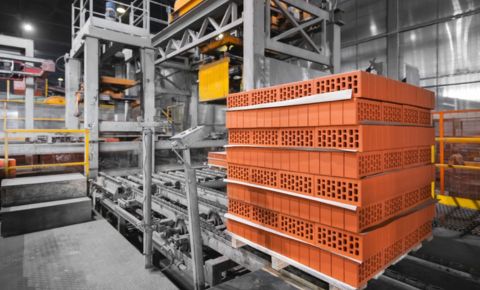
Pallet Conveyor Systems: Engineering Durable Design for Longer Life with High-Grade Materials Author : Sheetal Choudhary The stretch wrapper is idle. The robotic palletizer is cycling. Between them, a loaded pallet sits on a conveyor that stopped moving seven minutes ago. The maintenance log will call it a mechanical failure. The procurement record will show it was signed off eighteen months ago. Pallet conveyor systems do not degrade randomly. Corrosion follows a path. Bearing failure follows a load cycle. The failure visible today is the specification decision that was invisible at the time of purchase. A pallet conveyor system is a powered material handling system that moves loaded pallets between robotic palletizers, stretch wrappers, staging areas, and truck loading docks. In end-of-line operations, it sets the throughput rhythm for every machine it connects. Why Pallet Conveyor Systems Fail Before Their Time A conveyor frame does not fail on the day it is installed with the wrong specification. It fails on month 19, during a peak shift, when the replacement part is 8 days out, and three downstream machines are waiting. A cement plant that is running three shifts exposes its conveyors to abrasive particulate, humidity swings, along with repeated 1,200 kg load impact. Carbon steel again absorbs that punishment, but not indefinitely. Surface rust progresses inward at the grain boundary. Bearing housings corrode. Chain links stretch under repeated impact load. By month 18, the system is running beyond its specification; then, it’s running silently; until it does not run at all. As per the Siemens True Cost of Downtime 2024 report, unscheduled downtime costs the world’s 500 largest companies a combined USD 1.4 trillion annually, equivalent to 11% of revenues. A single conveyor failure does not idle one machine. It idles the entire dispatch end of the line. Industrial conveyor systems that are correctly specified and sized prevent this from being a recurring event rather than an occasional one. A food and beverage plant installs powder-coated mild steel because the purchase price fits. Daily washdowns strip that coating within months. The industrial pallet handling system corrodes inside a hygiene-controlled facility. A cost decision becomes a compliance liability. How High-Grade Materials Change the Lifespan Equation Material selection is not about spending more at procurement. It is about matching material grade to the degradation mechanisms of the actual operating environment. Stainless steel grade 304 is mainly the baseline for high-grade conveyor materials in food, pharmaceutical, and personal care operations. It possesses a smooth and corrosion-resistant surface, which aids in hygienic cleaning and lowers the chances of retaining bacteria. Powder-coated mild steel remains correct for dry indoor environments with no washdown or chemical exposure. Sound pallet conveyor design does not over-specify. A general manufacturing plant moving 800 kg pallets in a controlled building does not need stainless. Specifying it adds capital cost with no return. The cement scenario is typically a concrete business case: a 3-shift production line that uses 1200 kg pallets. A galvanized frame would last longer than a standard mild steel construction because the galvanization would usually be either a zinc coating that would corrode first, or a zinc coating that effectively makes a sacrificial barrier: the zinc would corrode first, and the steel underneath would remain protected. Galvanized frames have a lower lifecycle cost in high humidity and high cycle environments, primarily within the first two years of use, in three-shift operations. After that point, the mild steel system costs more per operating month to maintain than the galvanized system costs extra to buy. Across high-cycle pallet handling operations in cement, chemical, and heavy manufacturing environments, one of the most consistent causes of premature failure is bearing specification sized for average load rather than peak load. Alligator Automations’ engineering team accounts for peak load, not average load, when sizing every bearing specification in the pallet conveyor systems they design and build. Bearings sized for average load fail at peak load. That is not a risk. It is a scheduled outcome. Which Pallet Conveyor Configuration Is Right for Your Operation? The right configuration is determined by unit load weight, movement pattern, and environmental conditions, not by cost or convention. Chain-Driven Live Roller (CDLR) conveyors are the standard for durable conveyor systems in cement and chemical plants handling 1,000 to 4,000 kg unit loads. The roll-to-roll chain distributes load across multiple rollers so no single contact point absorbs the full weight. Accumulation pallet conveyors allow loaded pallets to queue without contact pressure. Zero-pressure accumulation is not optional in food and pharmaceutical operations where pallet-on-pallet impact compromises packaging integrity. Pallet transfer and turntable units handle direction changes under load. Every rotation cycle places combined radial and axial load on the same bearing. Undersized bearings fail from accumulated stress of partial-load rotations, not from a single overload event. Gravity pallet conveyors suit low-traffic staging areas. Cold-chain and humid environments still require galvanized or stainless construction. Standard mild steel can show visible corrosion within the first year in humid or condensation-heavy environments. The replacement cost exceeds the material difference at purchase. How Do You Select the Right Pallet Conveyor System for Your Plant? Three inputs determine the correct specification: maximum unit load weight, operating environment, and daily cycle count. Every material and drive decision follows from those three inputs. End-of-line conveyor solutions specified from them hold their rated performance. Maximum unit load determines roller diameter, wall thickness, and drive sizing. Operating environment determines frame material and bearing housing type. Daily cycle count determines whether sealed bearings are a recommendation or a requirement. In a plant running 600 pallet movements per shift, open bearings in a dusty environment are a guarantee of early replacement. Table 1: Frame Material vs. Application Suitability Material Best Application Key Strength Avoid When Powder-coated mild steel Dry indoor, general manufacturing Cost-effective for controlled environments Washdown or chemical exposure Galvanized steel High humidity, outdoor staging Corrosion resistance at lower cost Direct food contact required Stainless steel 304 Food, beverage, pharma Hygiene compliance, washdown resistance Heavy abrasive load without hardening
The Future of Intralogistics: How Smart Conveyor Systems Are Redefining Global Warehousing in 2026
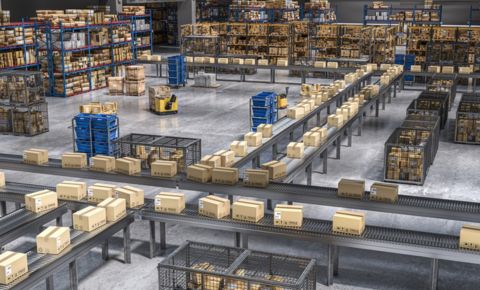
The Future of Intralogistics: How Smart Conveyor Systems Are Redefining Global Warehousing in 2026 Author : Srinivas Choudhary Warehouse and storage capacity are no longer synonyms; rather, in 2026 they are defined by how intelligently goods move through the facility, and conveyor systems are becoming the foundation of this modern intralogistics and warehouse automation. Be it the rising customer expectations, labour shortages, increasing SKU complexity, or the demand for faster fulfilment, global warehousing and the future of intralogistics are expected to reflect efficiency, intelligence, and adaptability of material flow. Now that’s neither a production failure nor a staffing one; in fact, what it actually is is a structural gap in internal material flow, and that is exactly what the new generation of smart conveyor systems is built to close. The modern smart conveyor system is so much more than just transporting products from one point to another. Industries worldwide are working to adapt to Industry 4.0 and digital transformation initiatives, from optimising material flow to improving throughput, reducing handling errors and improving worker safety. This brings us to understand deeply how smart conveyor systems are reshaping global warehousing in 2026 and what makes intelligent material handling the central concern for businesses seeking long-term operational excellence in this blog! Warehouses are no longer storage facilities: They are becoming intelligent flow centres. Before we move on to smart conveyor systems, it is essential to understand how the definition of intralogistics has shifted in 2026. Earlier, intralogistics meant internal material transport through mechanical functions of forklifts, conveyor runs, and storage systems within a facility. Now in 2026, intralogistics means a balance of material flow , information flow, and energy flow for the integrated management of goods and not just the physical movement of goods. This exact shift has placed the smart conveyor system at the centre of warehouse innovation. Advanced with AI, IoT connectivity, predictive analytics, and automation technologies, smart conveyor systems have transformed intralogistics operations across industries. What makes businesses today invest in smart intralogistics technologies is the modern conveyor system. A smart conveyor system has been transformed from a basic transportation tool to a connected automation platform that delivers speed, accuracy, and real-time operational capability capable of optimising the entire warehouse ecosystem. Moreover, what forces warehouses to become an intelligent flow centre is the growing complexity and fulfilment expectations in the global supply chain. The conditions now are putting businesses under pressure to optimise at every section of their operations. So, unlike traditional conveyors, warehouses prefer having smart systems with robotics, warehouse management systems (WMS), IoT sensors, and AI-powered analytics to create a connected, data-driven operation. How does a smart conveyor system improve warehouse operations? But exactly how does a smart conveyor system improve warehouse operations when order volumes increase, and fulfilment windows shrink? For this, warehouses today need to balance speed, accuracy, scalability, and cost efficiency simultaneously. And achieving these goals needs more than traditional material handling equipment and intelligent automation. A smart conveyor system is the ultimate competitive advantage for warehouses, as it combines automation, real-time monitoring, data analytics, and intelligent controls for an optimal material flow across the warehouse. Here are a few key smart ways in which a smart conveyor system improves warehouse operations: Accelerates material flow and order fulfilment; minimises operational bottlenecks Improves inventory accuracy and visibility Reduced labor dependency In addition to these, a smart conveyor system helps organise, detect potential failures early, schedule maintenance proactively, extend equipment lifespan, reduce repair costs, and improve system reliability. So, rather than replacing workers, this automation empowers the teams to focus on more strategic and value-driven operations. In 2026, businesses look for warehouses that invest in modern conveyor systems that provide more than just improved material handling and offer greater agility, scalability, and resilience in an increasingly competitive marketplace. 5 technologies powering the next generation of smart conveyor systems Now that we know how a conveyor system improves the operations of a warehouse and the overall future of intralogistics, it is also interesting to know a little bit about the technologies that make all of this achievable. Automation, connectivity, artificial intelligence and advanced analytics are a powerful combination of technologies that will power the next generation of smart conveyor systems to help businesses improve material flow and reduce downtime, but also build more resilient intralogistics operations. That said, here are five major technologies that are changing the future of warehouse automation and advanced material handling: Artificial Intelligence (AI) for Smart Routing and Decision Making to Reduce Congestion and Delays Internet of Things (IoT) for real-time visibility to find inefficiencies in operational performance and product movement Predictive maintenance analysis to reduce conveyor downtime and delayed shipments in high-value distribution centres Advanced automated sortation systems integrated with conveyor systems help in automatic identification, classification, and routing of products throughout the facility Seamless integration with robotics and warehouse management systems for creating a connected environment where information and materials move together efficiently Additionally, these technologies behind the working of a modern conveyor system contribute to a highly coordinated intralogistics operation capable of adapting to changing business demands in real time. Moreover, the future of warehouse automation is being shaped by various technologies that are collectively transforming the traditional conveyor system into a strategic business asset. What challenges are traditional warehouses facing, and what should businesses look for in a conveyor system? With this advancement in the future of intralogistics, same-day deliveries, volatile demand patterns, and increasing supply chain complexity, many warehouse facilities continue with traditional material handling processes. Now, the challenges of that are not limited to efficiency. While forward-thinking organizations are meeting these challenges with a smart conveyor system , here are a few common challenges that traditional warehouses are facing: Increasing order volumes and fulfillment pressure Growing SKU complexity Labour shortages and rising workforce costs Difficulty scaling during peak demand However, in 2026, having a competitive advantage in your warehouse that can not only move products but also manage the entire operation intelligently with conveyor systems marks
Robotic Palletizing Systems in FMCG Manufacturing: Benefits Explained
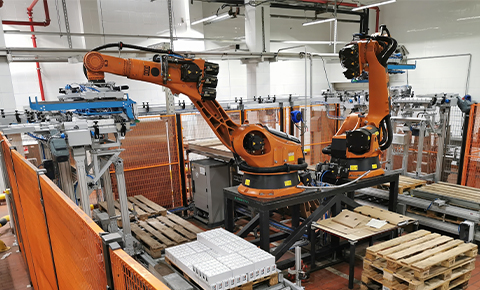
Robotic Palletizing Systems in FMCG Manufacturing: Benefits Explained Author : Srinivas Choudhary FMCG production lines run on volume that punishes inconsistency. A bottling line in a beverage plant might push out 60,000 units a shift. A snack food line moves cases at a pace that no manual stacking team can sustain past the first few hours. The moment human palletizers start to slow down, which they always do, the rest of the line either waits or builds up product faster than the pallets can absorb it. Robotic palletizing systems exist to remove that bottleneck. The technology has matured well past being a premium-tier investment. For most FMCG manufacturers running multiple shifts, robotic palletizing is now where the economics actually favor automation over manual labor. Why Manual Palletizing Breaks Down in FMCG The pace and variety of FMCG production create conditions that manual palletizing struggles to handle: Case weights that fall in the 10 to 25 kg range are repeated thousands of times per shift. Multiple SKUs running on the same line, each with different stacking patterns. Throughput requirements that exceed what manual teams can handle. Limited floor space that doesn’t accommodate large manual staging areas. Pallet quality variation creates problems downstream in shipping. These pressures compound on each other. A line running well at the start of a shift drifts off pace by mid-shift, and the cost of that drift gets absorbed in missed dispatch windows and damaged loads. What a Robotic Palletizer Actually Does A robotic palletizer receives cases, bags, bundles, or trays from an upstream conveyor and stacks them onto a pallet in a defined pattern. The robot follows programmed instructions for the SKU currently running, switches patterns when the SKU changes, and keeps cycling at constant speed for the full duration of the shift. The robot itself is only part of the system. End-of-arm tooling, which is what actually grips the product, is matched to what’s being palletized. Vacuum tools handle sealed cases. Clamp tools manage bags. Combination tools handle trays and open-top containers. Without the right tooling, the robot doesn’t deliver on what it’s specified for. The Benefits That Matter in FMCG Robotic palletizing delivers gains that show up across multiple parts of the operation: Consistent throughput across shifts, with no productivity decline through the day. Lower injury rates from repetitive lifting and twisting motions. Tighter stack quality, which reduces damage in transit and returns from distribution. Quick changeover between SKUs through pattern selection rather than physical reset. Reduced labor dependency in a sector where retention has become difficult. Robotic palletizing also brings: minimized product damage, optimized space usage, and error reduction, which translates to better operational profitability. Stack stability matters especially for products moving through long distribution chains, where damage at any handling point becomes lost inventory. Handling Product Variety Without Reprogramming Headaches FMCG operations rarely run a single SKU all day. A personal care line might switch between three or four bottle formats. A confectionery line might run different case sizes for retail and bulk channels. Robotic palletizers handle this through stored stacking patterns that operators can select from the control panel without rewriting code. The flexibility extends to packaging changes. When marketing decides to update a case size or pack format, the robotic system gets reprogrammed rather than rebuilt. That kind of adaptability matters in a sector where packaging refreshes happen on routine cycles. Integration With Existing Lines Most FMCG plants aren’t building new lines from scratch. They’re upgrading sections of existing operations. Robotic palletizers integrate into established conveyor layouts through infeed connections, pallet handling systems, and control links to upstream equipment. The robot communicates with case sealers, checkweighers, and stretch wrappers downstream so the entire end-of-line section operates as a coordinated system. Pallet handling is often the part that gets undersized in planning. Empty pallet dispensing, full pallet discharge, and slip sheet placement all need to keep pace with the robot. A palletizer cycling faster than its pallet handling can support ends up running at the slower What Manufacturers Should Weigh Before Investing The decision to install robotic palletizing should account for several variables: Sustained throughput requirements across all shifts, not peak figures. Number of SKUs and how often the line changes between them. Available floor space, including overhead clearance for the robot’s reach. Existing line infrastructure and how cleanly the robot integrates with it. Maintenance capability within the plant or through service contracts. The strongest returns come from operations running two or more shifts with consistent volume. Single-shift operations with low SKU counts may see longer payback periods, though the safety and consistency benefits still apply regardless of shift count. Conclusion FMCG manufacturing has reached a point where robotic palletizing isn’t just an efficiency play. It’s a structural answer to labor shortages, rising injury costs, and the quality demands of modern distribution. Plants still running manual palletizing on high-volume lines are typically paying for it in ways that don’t always show up on the operating line of a P&L. Alligator Automations builds robotic palletizing systems designed for the variety and pace of FMCG production. Their systems handle multiple SKUs, integrate with upstream packaging equipment, and include ERP and IoT connectivity for plants to track line performance in real time. The company’s broader work covers automatic bagging systems, intralogistic conveyors, case packers, depalletizers, pallet packaging across stretch wrapping, stretch hood, strapping, and thermo shrinking, along with automatic truck loading. Plants evaluating end-of-line automation can take that discussion directly to Alligator Automations to figure out the best solution. FAQs 1. What is a robotic palletizing system? A robotic palletizing system is an automated setup that uses a robotic arm to stack products, cases, or bags onto pallets in a defined pattern. It works at the end of a production or packaging line. 2. Why are robotic palletizing systems important in FMCG manufacturing? FMCG production runs at volumes and shift lengths that manual palletizing struggles to sustain. Robotic systems hold consistent output across shifts and remove the bottleneck that manual stacking creates. 3.