Material Handling Conveyors for Chemical Manufacturing: Safe and Reliable Material Movement
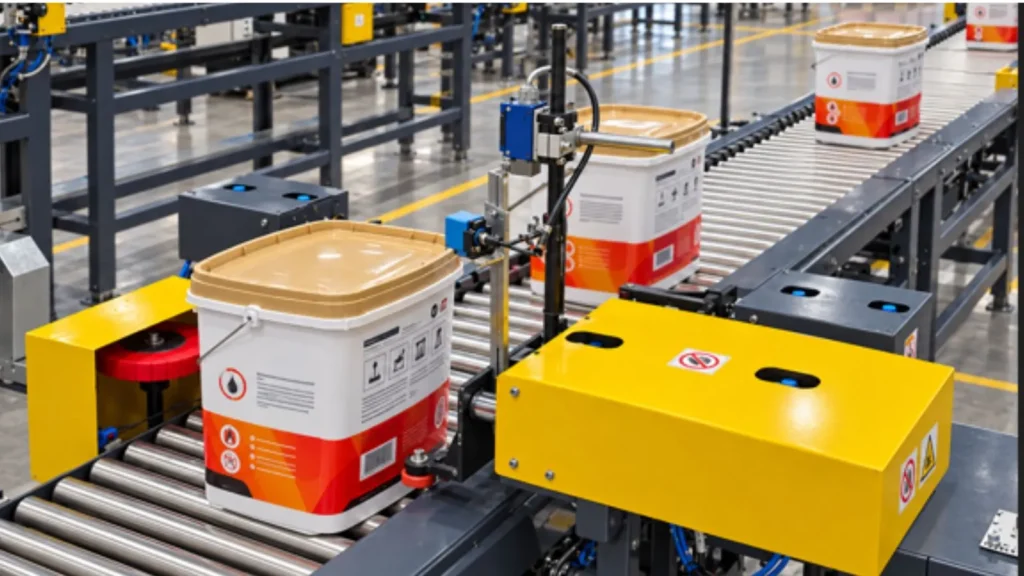
Summary Material handling conveyors for chemical manufacturing are designed to provide controlled, reliable, and efficient movement of bags, containers, cases, and other materials within demanding industrial environments. Introduction Chemical manufacturing facilities often handle raw materials, chemicals, bags, containers, packaged products, and finished goods that need to move between different stages of production and packaging. Manual transportation can increase handling requirements and create unnecessary movement within the facility. A properly engineered material handling conveyor can help create a more organized and controlled material flow. However, chemical manufacturing requires careful consideration of the operating environment, material characteristics, load, conveyor construction, safety, and maintenance requirements. This blog explains how to choose the right material handling conveyor for chemical manufacturing and what factors should be considered before installation. What is a Material Handling Conveyor? A material handling conveyor is an industrial transportation system used to move products, materials, bags, containers, cartons, cases, pallets, and other loads within a manufacturing or processing facility. In chemical manufacturing, conveyors may connect: Raw material handling areas Processing sections Packaging machines Bagging stations Palletizing systems Warehouses Dispatch areas The conveyor design should be selected according to the material, packaging format, load, required throughput, and operating conditions. How Does It Work in Chemical Manufacturing? Material Loading Materials or packaged products are introduced onto the conveyor from a production or packaging process. Controlled Transportation The conveyor moves materials at a defined speed through the required route. Detection and Positioning Sensors can detect products and help coordinate movement between different conveyor sections. Transfer Transfer equipment can change the direction or route of materials where required. Packaging and Palletizing The conveyor can connect bags or packaged products with palletizing and packaging systems. Storage and Dispatch Finished packages can be transported to staging, storage, or dispatch areas. Types of Material Handling Conveyors Belt Conveyors Suitable for bags, packaged materials, cartons, and other products requiring continuous transportation. Roller Conveyors Useful for containers, boxes, cases, and palletized products. Pallet Conveyors Designed for moving heavy pallets through packaging, warehousing, and dispatch operations. Chain Conveyors Can be used for heavier or rigid products where robust transportation is required. Bag Handling Conveyors Designed for transporting filled bags from filling or packaging equipment to subsequent stages. Specialized Transfer Systems Used when materials need to change direction, elevation, or conveyor route. Applications in Chemical Manufacturing Material handling conveyors can support: Chemical bags Fertilizer bags Packaged chemicals Containers Drums Cartons Pallets Finished packaged products They can be used in production, packaging, palletizing, warehouse, and dispatch operations. Factors to Consider Before Choosing a Material Handling Conveyor Material Characteristics Understand the material and its packaging before selecting the conveyor. Load Weight The conveyor must be designed according to the maximum expected load. Throughput Calculate the number of bags, cases, containers, or pallets that need to be transported per hour. Operating Environment Consider factors such as dust, moisture, temperature, cleaning requirements, and potential chemical exposure. Conveyor Construction Material selection and equipment construction should be appropriate for the industrial environment. Safety Safety features such as emergency stops, guarding, sensors, and appropriate access controls should be considered according to the application. Maintenance Choose a system that allows convenient inspection, servicing, and replacement of components. Automation Integration The conveyor should be compatible with packaging machines, palletizers, robots, sensors, PLCs, and other equipment where required. Comparison Table Conveyor Type Typical Application Suitable Loads Belt Conveyor Bags and packaged products Light to medium Roller Conveyor Cases and containers Medium Pallet Conveyor Pallet handling Heavy Chain Conveyor Heavy rigid products Medium to heavy Bag Conveyor Filled bags Bagged materials Transfer Conveyor Product routing Application-specific Common Mistakes / Challenges Ignoring the Operating Environment Chemical manufacturing environments can have specific environmental requirements that need to be considered during equipment selection. Incorrect Load Calculation Underestimating the maximum load can affect conveyor performance and equipment life. Poor Layout Improper conveyor routing can create unnecessary movement and difficult maintenance access. Insufficient Safety Planning Safety should be considered during system design rather than added later. Lack of Automation Integration A conveyor that does not synchronize properly with connected machinery can become a production bottleneck. How Alligator Automations Supports Chemical Industries Alligator Automations provides industrial conveyor and material handling solutions for industries including chemicals and fertilizers. Its intralogistic conveyor solutions include belt conveyors, roller conveyors, pallet conveyors, case/bag/crate handling systems, and specialized transfer solutions. The right conveyor can also be integrated with packaging and end-of-line automation to create a more efficient material flow from packaging through palletizing and dispatch. Need a reliable material handling conveyor for your chemical manufacturing facility? Contact Alligator Automations to discuss your application, load requirements, throughput, and factory layout. Conclusion A properly designed material handling conveyor can improve the movement of materials and packaged products within a chemical manufacturing facility. The right system should provide reliable transportation while being appropriately designed for the product, load, operating environment, safety requirements, and production capacity. Alligator Automations offers conveyor and intralogistic solutions for chemical and fertilizer industries, helping manufacturers develop efficient material movement and end-of-line automation systems. FAQs 1. Why are conveyors important in chemical manufacturing? They help create controlled material movement between production, packaging, palletizing, storage, and dispatch areas. 2. Which conveyor is suitable for chemical bags? Belt and specialized bag handling conveyors can be considered depending on bag dimensions, weight, speed, and the required material flow. 3. Can material handling conveyors handle heavy loads? Yes. Pallet and heavy-duty conveyor systems can be engineered for heavy loads. 4. Can conveyors be customized for chemical factories? Yes. Conveyor design can be adapted to product characteristics, load, throughput, layout, operating environment, and automation requirements. 5. Can conveyors connect with packaging machines? Yes. Material handling conveyors can be integrated with filling, packaging, palletizing, and other automated equipment. 6. What should I consider when choosing a chemical industry conveyor? Consider material characteristics, load, throughput, operating environment, conveyor construction, safety, maintenance, layout, and automation integration.
What is a Roller Conveyor System? How Does it Work?

What is a Roller Conveyor System? How Does it Work? Walk into any modern factory and you’ll see conveyors doing the heavy lifting. They’re not flashy, but they keep goods moving; without them, most lines would stall. The demand for conveyors is only rising. Industry studies suggest the conveyor system market could cross USD 12.6 billion by 2032 (Source), and roller conveyors form a big part of that story. Why roller conveyors? Because they’re sturdy, adaptable, and designed to handle everything from small cartons to bulky pallets in secondary packaging lines. What Is a Roller Conveyor System? Think of it as a simple frame with a series of rollers lined up. Place a carton on top, and it moves forward, either by gravity or with the help of powered drives. That’s the basic idea. It is not the simplicity that has made roller conveyors a big part of packaging and distribution. It is the flexibility. Unlike belt conveyors, designed with one consistent moving surface, rollers simply carry the load. This makes them more dependable and robust when dealing with rigid, heavy products that rely on proper distribution. How Do Roller Conveyor Systems Operate? There are two types of systems: Gravity Roller Conveyors: They do not require motors. Simply put a small slope on the roller conveyor, and gravity takes care of the rest.Alligator Automations designs are built for heavy-duty performance, with robust frames and optimized roller spacing, so cartons can move freely without sudden stop-and-go moments. Gravity roller conveyors are used where power is either not suitable or not needed, such as in accumulation zones or in transfer zones, or if packages need to keep flowing. Powered Roller Conveyors: In this design, the rollers are powered in some way. It can be through a belt system, a chain system, or a roller driven by an electric motor. Alligator provides both chain-driven and motorized roller conveyor options, giving end-users more control over speed and flow. These are the conveyors that link seamlessly with palletizers, case packers, or sortation systems. Their build quality allows them to run continuously, even with heavy-duty loads. The most advantageous aspect of both varieties is their modularity. Straight runs, curves, and merges; use them in any combination as the situation requires. Also, if your plant layout changes down the road, you can modify sections instead of removing and replacing sections. Gravity vs Powered: What’s the Difference? Here’s a quick comparison to highlight the strengths of each system: Feature Gravity Roller Conveyor Powered Roller Conveyor Energy Use No external power, relies on the slope Requires motor or chain drive Flow Control Limited, product speed depends on the incline Full control over speed and accumulation Load Handling Suited for light to medium loads Handles everything up to heavy pallets Integration Works as a standalone or storage transfer Integrates with automated packaging lines Maintenance Very low Moderate (due to motorized components) Points to Weigh Before Choosing a Roller Conveyor Every operation is different, and picking the right system makes a big difference to long-term efficiency. There are a couple of considerations to keep in mind: Load Capacity: Each roller has a load capacity associated with it. If you overestimate your “average” load, you could experience bent rollers, increased downtime, or increased costs. Always center the rating on the heaviest product you will move. Roller Material: Steel is reliable; stainless steel works best for humid or washdown environments; rollers with coatings lower friction created by misalignment and will reduce scuff marks on printed cartons. Drive Method: Gravity saves power and is simple to maintain, but powered conveyors give you the accuracy and integration most automated plants now need. The choice often comes down to whether the line is manual, semi-automated, or fully automated. Layout: Straight runs are relatively easy to design a solution for. However, many plants will require curves, merges, or accumulation zones. Properly thought through, the layout will prevent bottlenecks and provide adequate space to allow operators to move around safely. Integration: Finally, today’s conveyors rarely run independently of other systems. A conveyor must work as part of a system with case packers, palletizers, and, in some cases, automated storage. Choosing to implement a system designed for integration saves time, resulting in better downtime and smooth transitions of product through the packing process into the warehouse. Why Conveyors Matter in Packaging? A roller conveyor system is more than just a means of moving cartons or bags from point A to point B. It is the lifeblood of plant flow. Gravity conveyors give a low-cost, reliable option, while powered solutions allow for control and speed in slower, complicated lines. Leverage a combination of these types of conveyors to minimize manual handling, reduce errors, and keep production flowing. At Alligator Automations, roller conveyors provide solutions to complement an entire system you may need. It is part of their complete secondary packaging palletizing, case packing, and end-to-end offer. What they offer is straightforward: one partner, one integrated system, and a flow of operations from end to end. Ready to upgrade your line? Reach out to us to build a conveyor system that will stand the test of time. FAQs 1) What is a roller conveyor system? A roller conveyor system is a conveyor that is constructed from rollers supported on a frame that moves goods using either gravity or powered drives. 2) How does a roller conveyor system work? The action of rotating the roller allows products to move along the roller conveyor. The rollers can move on a slope with gravity, or be powered by a roller with a motor or chain. 3) What types of roller conveyor systems are there? The main types of roller conveyor systems are gravity roller conveyors and powered roller conveyors, which can be chain-driven or motorized. 4) Where are roller conveyor systems commonly used? A roller conveyor system can be found in secondary packaging, logistical companies, automotive, warehouse, or distribution centers. 5) Can roller conveyors move heavier loads? Yes. Powered roller conveyors are built